Libre 3 users alerted to issues
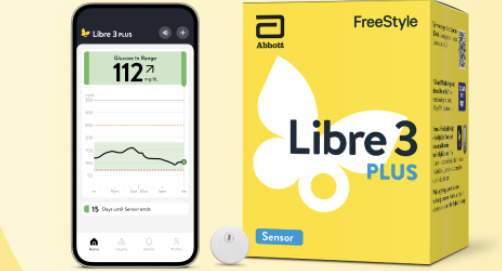
Faulty readings from Abbott’s Libre 3 and Libre 3 plus continuous glucose monitors have been linkedto 7 deaths and 736 adverse events according to the US Food and Drug Administration (FDA). The FDA is the US government regulator with a remit covering medical devices as well pharmaceuticals and food. The UK equivalent is the Medicines and Healthcare Regulatory Authority (MHRA), in Europe it is the European Medicines Agency (EMA). The MHRA has also issued a Field Safety Notice, essentially an alert, to healthcare professionals and suppliers of the Libre 3 and Libre 3 plus systems. The EMA has been informed of the situation by Abbott and are no doubt taking similar action.
CGM safety
I’ve used a Libre device in the past, as described in my post on blood glucose monitoring back in October. The device seemed to work fine for me but the problem has occured with a more recent batch of sensors. It is slightly concerning that such a large number of people have reported issues and several have lost their lives. The regulations around Medical Devices have safety as a key component. The fact that a large batch of sensors has been released onto the market suggests that something has gone seriously wrong with quality control in the production line. I’m sure Abbott will be making every effort to rectify the situation and will be reviewing its quality systems. Hopefully other manufacturers will do likewise. However, I suspect this issue will make people think twice about acquiring a CGM in the future.
Do you need CGM?
For people with controlled T2D like me, this is not really a big issue but I know several people who rely on continuous monitoring to regulate their medication. This is of particular relevance to insulin users.
I don’t really need CGM to control my diabetes as diet, exercise and remembering to take my pills appropriately seems to be working fine. My body is also very good at letting me know when I’m starting to go hypoglycemic. I get light headed and start cold sweating when my blood glucose dips. If I measure my blood sugar at the point I get the hypo warning it is usually still above 4 mmol/L (i.e. within the supposedly normal range). Knowing your body is important.
At a cost of £150 a month for CGM devices, for many it is a luxury lifestyle choice. For those who really need it, you should be able to get it on prescription.
Winter is coming
I actually have a friend called John Snow! Sadly John didn’t really take to skiing so he won’t be on our next ski trip to Austria in January. However, the Abbott story has made me think again about using a CGM whilst I’m away. Last time I tried this I was surprised at how small an effect skiing had on blood sugar spikes compare to walking. So maybe I’ll try it again but with a different supplier (i.e. not Abbott) this time.
Anyway, here is a picture of the Schmittenhohe in Zell am See, where I will be celebrating my birthday next month.